In an era defined by rapid technological advancements and shifting geopolitical alliances, understanding the nuances of global military spending and nuclear capabilities is more crucial than ever. This in-depth blog post explores the current state of nuclear arsenals, analyses the global trends in military expenditure, and includes charts and graphs for a comprehensive understanding.
Nuclear weapons remain a cornerstone of the defence strategy for several countries, each with its own policy and stockpile.
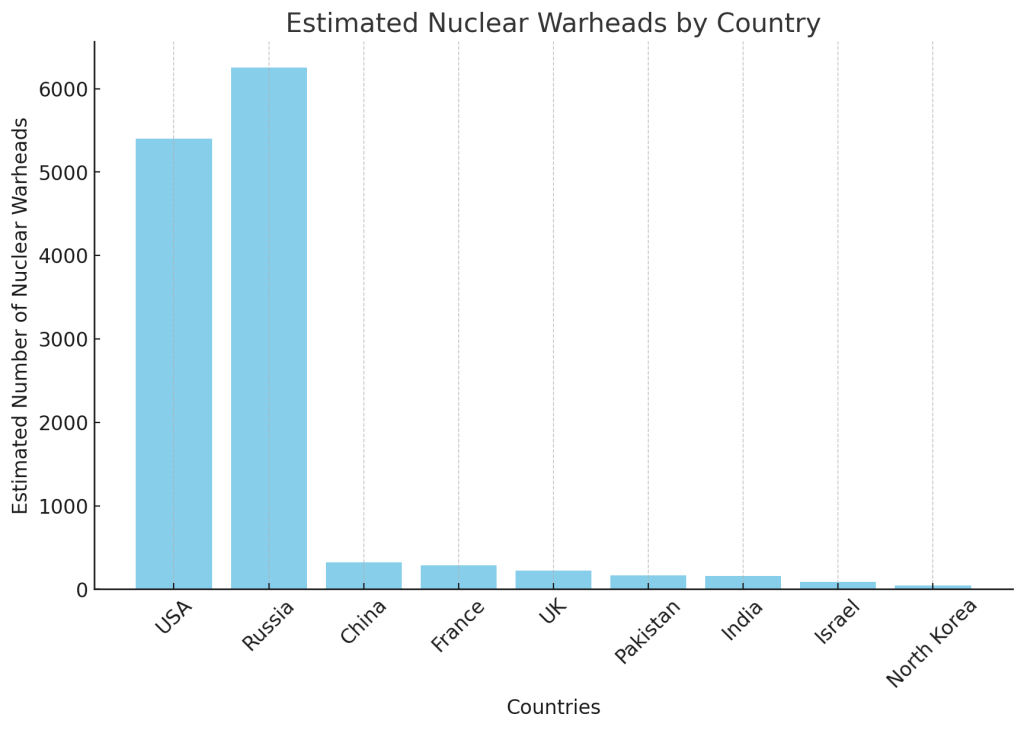
Nuclear Powers and Their Arsenals
- United States: Boasting one of the largest nuclear arsenals in the world, the U.S. has been a nuclear power since World War II.
- Russia: With a stockpile comparable to the U.S., Russia continues to be a dominant nuclear force.
- China, France, and the UK: These countries maintain significant, though smaller, nuclear capabilities.
- India, Pakistan, and North Korea: Known for their growing nuclear programs, these countries add complexity to regional security dynamics.
- Israel: While its nuclear capabilities are not officially acknowledged, Israel is widely believed to possess nuclear weapons.
Military Spending Trends Around the World
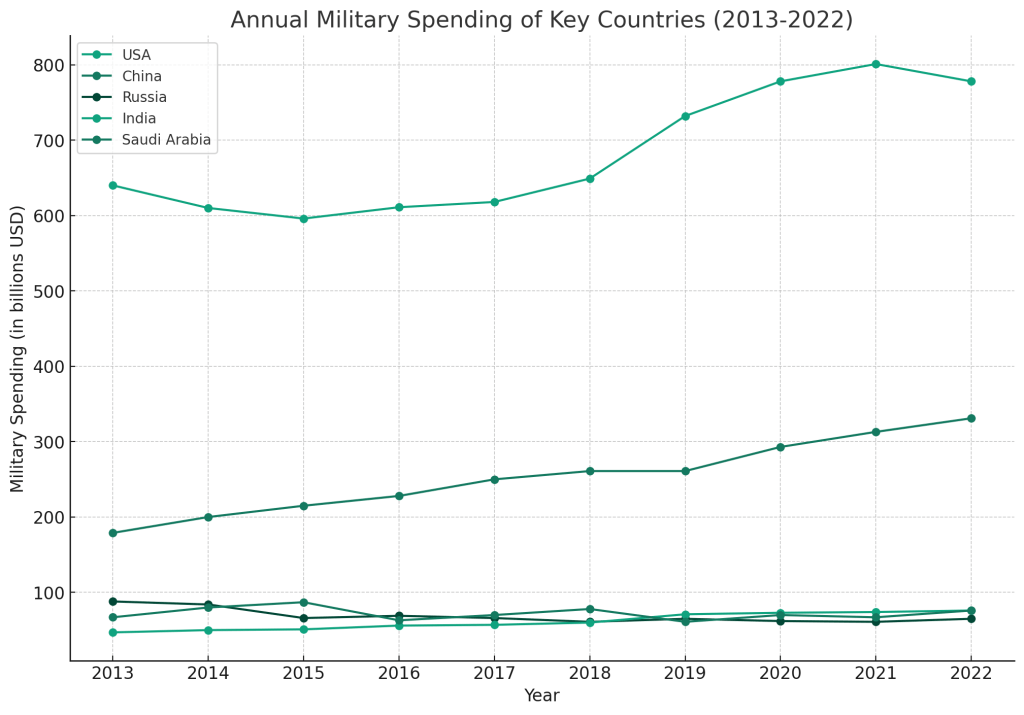
Global military spending is a multifaceted indicator of a nation’s economic priorities, strategic concerns, and geopolitical ambitions.
Recent Statistics and Analysis
- The United States: Continues to lead in absolute military spending, investing heavily in advanced technology and global military presence.
- China and Russia: These nations have significantly increased their military budgets, reflecting their strategic objectives.
- Emerging Economies: Countries like India and Saudi Arabia are also increasing their defence budgets, partly driven by regional security concerns.
The Interplay Between Nuclear Capabilities and Military Expenditure
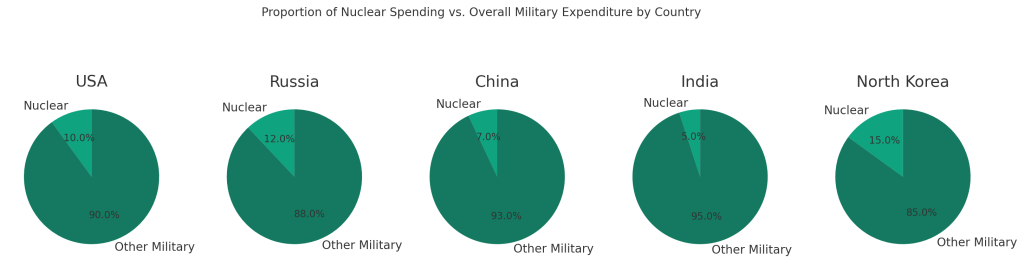
The relationship between a country’s nuclear arsenal and its overall military spending is complex and often strategic.
Case Studies
- United States and Russia: A comparison of how these superpowers balance their nuclear capabilities with conventional military forces.
- North Korea: An example of a country focusing heavily on nuclear capabilities, often at the expense of broader military development.
The intersection of nuclear proliferation and increased military spending raises critical questions about global security and the future of international diplomacy.
Challenges Ahead
- Balancing national security with global peace.
- Addressing the risks of nuclear proliferation.
- The role of international treaties and agreements in promoting stability.
The Way Forward
- Fostering international dialogue and trust-building measures.
- Promoting arms control and disarmament initiatives.
Understanding the intricacies of global military spending and nuclear capabilities is not just the purview of policymakers and experts. It’s a subject that requires the attention and understanding of informed citizens around the world. As global dynamics continue to evolve, staying informed and engaged in these critical issues is essential for advocating for a world that values peace, stability, and security.


 IBAFIN
Leave a comment