
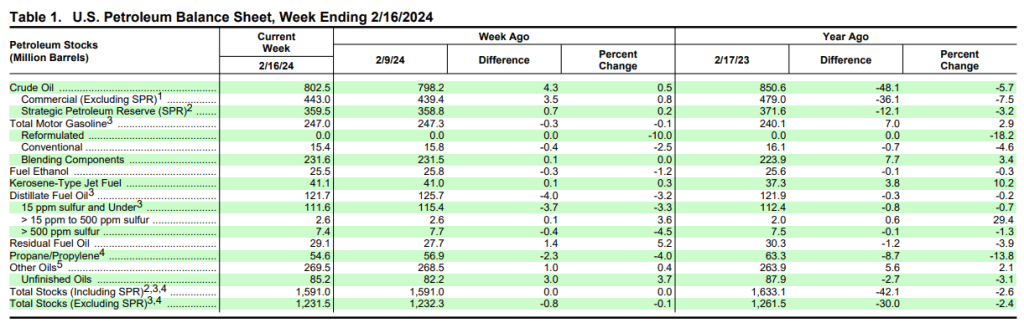
The latest data on the U.S. Petroleum stocks has been released, providing us with an insightful snapshot of the country’s energy reserves for the week ending February 16, 2024. Let’s dive into the numbers and see what they tell us about the current state of petroleum supplies.
The crude oil inventories stand at 802.5 million barrels, a slight increase of 0.5% from the previous week. This incremental rise is modest when we consider the commercial stocks, excluding the Strategic Petroleum Reserve (SPR), which saw an increase of 4.3 million barrels. The SPR itself experienced a marginal increase, underscoring a relatively stable reserve situation.
In contrast to crude oil, total motor gasoline stocks took a dip, with a 10% decrease in reformulated gasoline stocks. This significant drop might indicate a surge in consumption or reduced refinery output. The blending components also decreased but by a smaller margin of 0.4%.
Kerosene-type jet fuel and distillate fuel oil saw reductions in inventory levels, suggesting an uptick in demand or a lag in production for these fuels. The jet fuel stocks decreased by 3.7 million barrels, while distillate fuel oil inventories dropped by 4.0 million barrels. Fuel ethanol, however, remained almost constant, showing minimal change from the previous week.
When comparing the data with the same week from the previous year, we observe some notable differences. Crude oil stocks are down by 48.1 million barrels, a 5.7% decrease year over year. This trend extends to several other categories, with significant decreases in propane/propylene and other oils indicating a downward trend in reserves or higher consumption rates over the year.
The current figures reveal several trends in U.S. petroleum stocks. While crude oil shows a slight weekly increase, the yearly comparison paints a picture of declining reserves. This could have several implications for energy policy, market prices, and the broader economy. The drop in gasoline components may be a concern for motorists and could suggest potential increases in gasoline prices if the trend continues.
The decrease in jet fuel and distillate fuel oil inventories suggests a rebound in travel and transportation sectors, possibly reflecting a post-pandemic recovery phase. However, it’s important to monitor these trends closely to ensure that supply can meet the increasing demand.
As always, these numbers provide only a snapshot. The real value comes from understanding the underlying causes and potential impacts on both the economy and consumers. We’ll keep an eye on these developments and provide updates as the situation evolves.
For those interested in the details, here’s a breakdown of the key figures from the report:
- Crude oil stocks: 802.5 million barrels (Current week)
- Total motor gasoline: 247.0 million barrels (Current week)
- Kerosene-type jet fuel: 41.1 million barrels (Current week)
- Distillate fuel oil: 121.7 million barrels (Current week)
- Propane/Propylene: 54.6 million barrels (Current week)


 IBAFIN
Leave a comment