
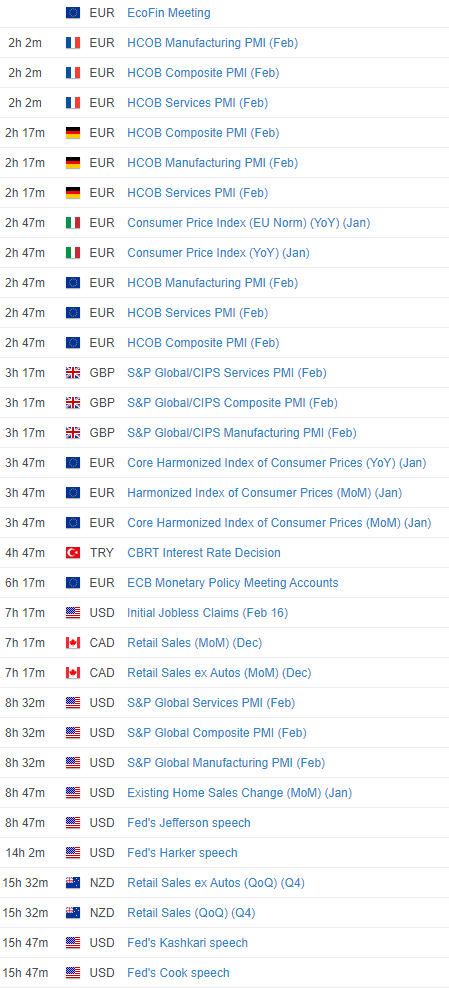
Today’s economic calendar is brimming with medium to high-impact data releases that are expected to create waves across various markets. Investors and policy makers alike will be keenly observing these releases to gauge the health of different economies and to make informed decisions.
The day started with a focus on the European market, where the German Unemployment Change data was released. This indicator is pivotal as it reflects the economic stability in Europe’s largest economy. Following closely were the M3 Money Supply and Private Loans data for the Eurozone, which offer insights into the overall economic activity and the condition of the financial sector in the region.
Midday brought the release of Consumer Confidence Index from the Eurozone, a key indicator to assess the sentiment and economic outlook of consumers. Consumer confidence is a leading indicator of consumer spending, which constitutes a large part of overall economic activity.
Across the pond, the U.S. market anticipated the release of the S&P/CS Composite-20 HPI, which tracks changes in the value of the residential real estate market in 20 regions across the US. This index is a leading measure for the U.S. housing market, an important sector of the economy.
Other crucial data from the United States included the Chicago PMI and the CB Consumer Confidence. The Chicago PMI is an important indicator of the economic health of the manufacturing sector in the Chicago region. The Consumer Confidence, on the other hand, is a measure of the overall economic optimism as viewed by consumers and can be a harbinger of spending behavior.
On the commodities front, data on the U.S. Crude Oil Inventories was released, which is essential for energy markets as it indicates supply levels which can affect oil prices.
Finally, the day was expected to close with the FOMC Meeting Minutes, which is highly anticipated by the market participants. The minutes provide in-depth insights into the Federal Reserve’s monetary policy and future decision-making process, which can significantly influence the financial markets.
In summary, today’s data releases are a mix of employment, consumer sentiment, housing, manufacturing, and monetary policy insights. These releases are key to understanding the current economic climate and are likely to influence market sentiment, monetary policy decisions, and investment strategies. Investors will be parsing through these figures to adjust their portfolios, while central bankers may use the data to plan their next moves in terms of monetary policy.
Remember to keep an eye on these indicators as they can often lead to increased market volatility and provide opportunities for the astute observer.


 IBAFIN
Leave a comment