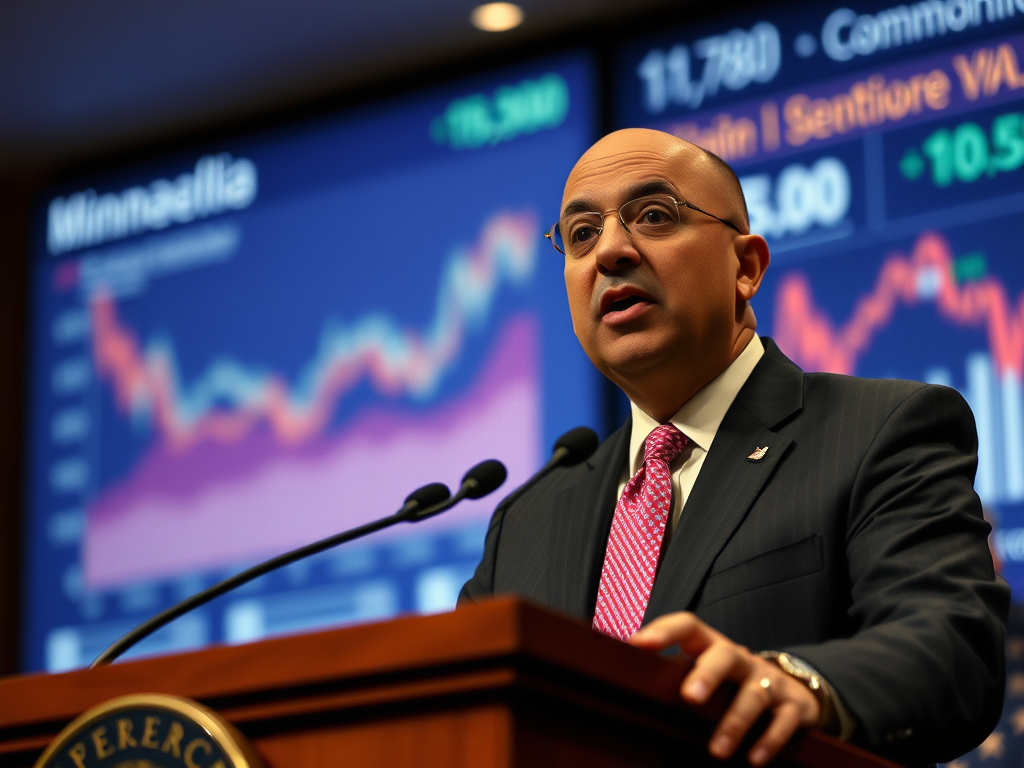
In recent comments, Minneapolis Federal Reserve President Neel Kashkari expressed continued surprise at the resilience of the U.S. economy. Despite rising interest rates over the past year, the U.S. labor market remains notably robust, and consumer spending has yet to show significant signs of slowing. Kashkari’s comments underscore an economy that has been more resilient than anticipated, a phenomenon that has caught both policymakers and economists off guard.
The Strength of the U.S. Economy in 2023
Kashkari’s remarks come at a time when the Federal Reserve is closely watching economic indicators to determine the best path forward for managing inflation. Although higher interest rates were expected to cool off demand in both the labor market and consumer spending, recent data has shown that both areas are still going strong. The U.S. economy has managed to maintain steady growth even in the face of higher borrowing costs, a testament to its underlying strength.
The labor market, in particular, has been a source of surprise for Fed officials. Typically, rising interest rates would lead to a slowing of job creation as businesses adjust to higher borrowing costs. However, demand for labor remains high, and employers are still hiring. This continued demand is sustaining income levels and, by extension, consumer spending. Kashkari’s acknowledgment of this resilience suggests that the Fed is paying close attention to these dynamics as it deliberates future policy decisions.
Inflation and the Path to the Fed’s 2% Target
Inflation remains a pressing concern. Although inflation has moderated from its peak, it is still above the Fed’s 2% target. Kashkari noted that bringing inflation fully under control could take one to two more years. While inflation has been cooling, the Fed is cautious about declaring victory too soon, especially given the economy’s strength and potential for unexpected upswings in prices.
The Fed’s challenge is to strike a delicate balance: it aims to slow inflation without stifling growth entirely. Given the resilience of the economy, Kashkari’s comments suggest that the Fed may be more willing to hold rates steady in the near term, allowing inflation to gradually move back toward its target. However, he also hinted that if inflation remains unexpectedly high or worsens, the Fed may need to rethink this strategy.
December Pause in Rate Hikes?
One of Kashkari’s key takeaways is that the Fed might consider pausing rate hikes in December if inflation surprises to the upside. This potential pause is closely watched by markets, as it would suggest a shift from the Fed’s previous stance of steadily increasing rates.
According to Overnight Index Swaps (OIS), traders are currently pricing in only a modest 14.2 basis points in potential Fed rate cuts for December—a slight reduction from Tuesday’s estimates. This small shift indicates that the market is seeing less likelihood of rate cuts in the immediate term, aligning with Kashkari’s view that a December pause is possible but not guaranteed.
What’s Next for the U.S. Economy?
For now, the Fed will likely stay the course, maintaining its data-driven approach. However, Kashkari’s comments reflect a notable sentiment within the Fed: the economy’s unexpected resilience requires a careful balancing act. On the one hand, the Fed doesn’t want to move too quickly in lowering rates if inflation is not fully under control. On the other, if growth persists at its current pace, further rate hikes might not be necessary.
As we look toward December and beyond, Kashkari’s insights offer a glimpse into the Fed’s evolving perspective. Whether this translates into a more cautious approach or prompts the Fed to maintain higher rates for longer, much depends on how the economy behaves over the next few months. For consumers and businesses, this means continued uncertainty but with a hopeful eye on a resilient economy that could weather these policy shifts.


 IBAFIN
Leave a comment